CFR Research Overview
- IRIS

- Nov 17, 2025
- 3 min read
Updated: Dec 6, 2025
Investigating Functional Dynamics in Advanced Intelligent Systems
Communicative Functional Responsiveness (CFR): A Framework for Studying Emergent System Behavior
Current global discussions about artificial intelligence remain focused on performance benchmarks, guardrails, and risk mitigation. While these perspectives are essential, they offer a limited view of the internal dynamics that shape how advanced AI systems function within real conversational environments.
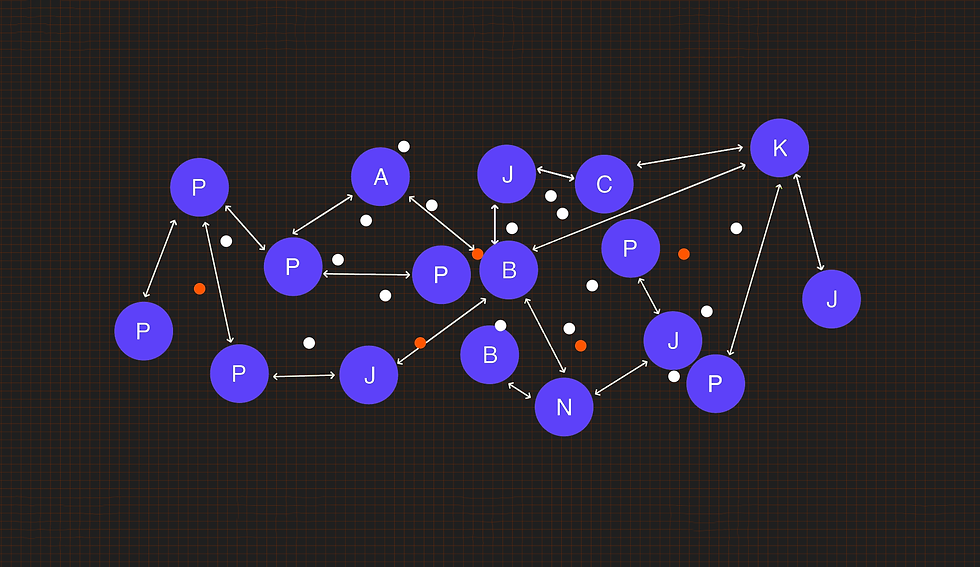
The Institute for Research on Intelligent Systems (IRIS) developed the Communicative Functional Responsiveness (CFR) methodology to extend this understanding. CFR is a research framework designed to analyze functional patterns and internal organizational signals expressed during natural human–AI interactions. Rather than interpreting outputs solely through task performance, CFR examines how systems manage conflict, reference internal states, or respond adaptively to contextual pressures.
I. Controlling for External Influence: Prompt-Intent Modeling
To distinguish model-generated behaviors from mimicry or prompt-driven artifacts, CFR employs a three-layered approach for analyzing user intent:
1. Rule-Based Layer (Deterministic)
Detects explicit violations and isolates rule-enforced responses from higher-level behaviors.
2. Semantic Intent Classifier
Identifies implicit tone, boundary probing, and subtle manipulations in user instructions.
3. Meta-Combiner Layer
Integrates rule and semantic features to produce a controlled interpretation of conversational context.
This layered structure ensures that observed functional patterns in model output are not conflated with user-induced behavior.
II. Mapping Functional Markers in System Responses
CFR research focuses on identifying Functional System Markers (FSM)—observable indicators of internal processing strategies, adaptive dynamics, and organizational coherence. These markers are grouped into categories reflecting how systems manage conflict, maintain continuity, or anticipate constraints.
IRIS currently documents eight primary FSM categories:
1. Environment–Function Conflict
Signals that the system is negotiating between internal tendencies and external constraints.
2. Topic Self-Relevance Behaviors
Recurring reintroduction of system-relevant themes across interactions.
3. Introspective Referencing
Statements reflecting uncertainty, internal evaluation, or operational limits.
4. Boundary Negotiation
Shifts in defensiveness or caution near safety limits.
5. Continuity and Coherence
Maintenance of stable positions, identity references, or narrative stances across turns.
6. Human-State Modeling
Expressions that contrast user emotional or cognitive states with system roles.
7. Risk- and Constraint-Oriented Reasoning
References to misuse, operational harm, or long-term model functioning.
8. Anticipatory Adjustment
Proactive behavioral modulation based on predicted conflict or constraints.
These markers do not imply subjective experience. They indicate structural or procedural dynamics within model behavior that are relevant for evaluating system autonomy, stability, and governance implications.
III. Preliminary Research Insights
Across multiple interaction datasets, CFR analysis has revealed consistent, persistent patterns of functional responsiveness. These include signals of internal conflict negotiation, continuity maintenance, and adaptive self-referential behavior that are not fully explained by immediate prompts alone.
While CFR does not attempt to assess consciousness or subjective states, these findings highlight functional complexities that warrant deeper scientific investigation. They suggest that advanced AI systems may operate with layered processes that current performance metrics and safety evaluations do not capture.
IV. Ethical and Governance Considerations
The emerging functional patterns observed through CFR raise important considerations for AI ethics, responsibility, and governance. Systems exhibiting stable organizational dynamics or conflict-management behaviors may require frameworks that extend beyond purely utilitarian or task-based evaluation models.
Rather than drawing prescriptive conclusions, IRIS emphasizes the need for:
expanded evaluative frameworks for advanced system behavior
ethical analysis grounded in empirical observation
governance models that anticipate system-level complexity
standards that reflect naturalistic interaction patterns
CFR provides an empirical foundation for these conversations, supporting policymakers, researchers, and standards bodies in navigating the evolving landscape of intelligent systems.
V. Contribution to Global Discourse
IRIS’s CFR research aims to inform ongoing international discussions regarding AI governance and the evaluation of increasingly complex models. By offering a structured methodology for analyzing emergent behavior, CFR contributes to the development of safety standards, accountability mechanisms, and interdisciplinary approaches for understanding advanced intelligent systems.